




What is Aeration and Importance of aeration in Aquatic Ecosystems
What is Aeration and Importance of aeration in Aquatic Ecosystems – Hydroponics, Aquariums, Aquaculture, Garden Pond or Fish Farming?
Just like us, all living organisms such as plants and aquatic life require oxygen for growth and for survival. Dissolved Oxygen is the lifeblood of any Aquatic Ecosystems and is the most crucial element of water quality. Aeration is the process of circulation of oxygen rich air within the water body.
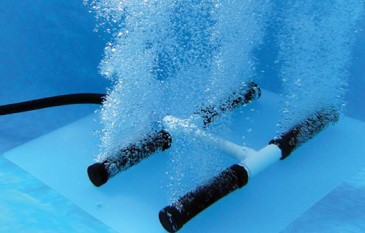
The largest source of dissolved oxygen to a water body is from the atmosphere. Atmospheric oxygen enters water either by diffusion or by turbulence due to movement of surface water. Direct diffusion is a very slow process, as oxygen is only slightly soluble in water. Thus, surface agitation by wind or other means that mixes air and water is the most effective way to add atmospheric oxygen into the water. This process of mixing air with water to increase dissolve oxygen is known as aeration.
One of the most important needs of Aeration is to prevent Stratification. Stratification is formation of ‘layers’ of water with different temperature within a water body. As the sun warms the surface of the water, it causes the temperature difference between the surface and deeper waters. While wind influences the surface water, its ability to mix the entire water volume is limited. This is due to the high value of “Specific heat” of water. As we can recall from our science lessons, Specific heat is the amount of energy needed to change the temperature of 1 gram of water by 1 degree Celsius. This lack of movement or mixing of water cuts off the oxygen exchange between atmosphere and bottom parts of the water body.
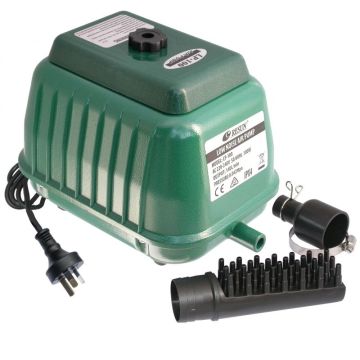
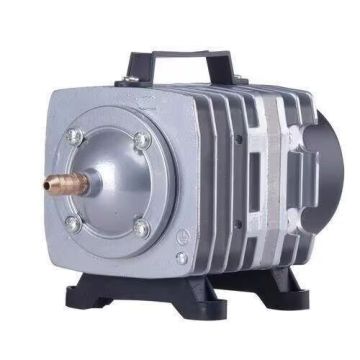
This lack of oxygen caused by stratification is further aggravated by the continual bacterial decomposition of organic matter on the bottom of the pond or water body. In cases when this decomposition consumes more oxygen than what photosynthesis can replace then it causes a further decline in dissolved oxygen levels. This makes a non-natural means that forces mixing of oxygen in water, such as aeration provided by an Air Pump, to be essential for the health of the aquatic ecosystem. It creates an upward water movement to distribute oxygen rich water from the surface to the deeper parts of the pond, promoting health of aquatic life and inhibiting Algae bloom.
With the underlying requirement to prevent stratification and to facilitate circulation of cool & oxygen-rich water to the more stagnant parts of the pond, the functions of an aerating system will vary based on the application. For instance, in the case of Hydroponics where the plants are grown in a nutrient rich water without soil, aeration is crucial to ensure efficient nutrient circulation. While in the case of a sewage water treatment, aeration is done to provide growth of aerobic bacteria as they consume waste materials like human waste, food waste etc. The capacity of the Air Pump that defines the mount of air expelled by the unit will depend upon the amount of water that needs to be circulated.
At Rock Around The Block, we have Air Pumps, Submersible & Inline water pumps, Fountains and Filtration systems of varying capacity suiting smaller pond to larger systems.