




What are top reasons for a Pond Aeration system?
What are the top reasons for the need for a Pond Aeration system?
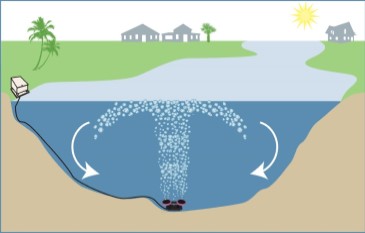
Aeration is the process of circulation of oxygen rich air within the water body.
Dissolved Oxygen (DO) is the lifeblood of any Aquatic Ecosystems and is the most crucial element of water quality management.
- Preventing Stratification: As the sun warms the surface of the water, it causes the temperature difference between the surface and deeper waters. Stratification is formation of ‘layers’ of water (water column) with different temperature within a water body. Aeration forces mixing of cooler water at the bottom of the pond with the warmer layer at the top, thus creating vertical circulation between the pond bottom and the surface.
- Ensure uniform Oxygen level: Lack of movement or mixing of water cuts off the oxygen exchange between atmosphere and bottom parts of the water body. Aeration creates an upward water movement to distribute oxygen rich water from the surface to the deeper parts of the pond, promoting health of aquatic life and inhibiting Algae bloom.
- Encourage growth of beneficial bacteria: Not aerating the pond will prevent water movement and can lead to stagnation, which is harmful to pond life. Aeration helps to keep the pond clean by promoting the growth of the healthy bacteria that remove nitrates and ammonia. In the case of Hydroponics where the plants are grown in a nutrient rich water without soil, aeration is crucial to ensure efficient nutrient circulation. While in the case of a sewage water treatment, aeration is done to provide growth of aerobic bacteria as they consume waste materials like human waste, food waste etc.
- Prevent Sludge build-up, Algae bloom and Aquatic weed: Lack or inadequate level of Oxygen prevents beneficial bacteria from breaking down organic waste. The absence of Oxygen also kills the bottom dwelling animals (snails, mussels, worms, etc.) that help to keep a pond clean, and causes the nutrients accumulated on the bottom surface of the pond to form a layer of muck which serves as fertiliser for weeds and algae.
- Odor and Phosphorus reduction: Uneaten fish food coupled with exposure to direct sunlight causes increase in levels of soluble Phosphorus in the pond water on which Algae depend on. Putrid odour indicates stagnation of water and algae bloom.
- Elimination of Fish kill: Accumulation of solids from fish waste or uneaten fish food will result in denitrification, which will cause ammonia concentrations to spike, causing fish getting killed overnight. Oxygen depletion also causes the fish to swim near the surface gulping air. During warmer stretch of days, this could result in fish kill due to higher temperature.
- Deterring Mosquito breeding and other diseases associated with Stagnant Water: While pond aeration and water flow are not a method to directly kill mosquitoes or larvae, it’s a great way to prevent them in the first place. Mosquitoes are always looking for stagnant waters instead of moving water, so a pond with good water flow can help prevent mosquitoes.